
Dr. Aditya Pratap
Project Coordinator
The kharif-season coordinated research network for nine pulse crops, operating through 35 regular centres across five agro-climatic zones, with its coordination unit at ICAR-IIPR, Kanpur.
602
Varieties released since inception
35
Regular centres, plus voluntary centres
9
Pulse crops coordinated
192
Scientific and technical staff
Crops coordinated
Part of the pulses network
One of the two coordinated projects that replaced the earlier chickpea, pigeonpea, MULLaRP and arid legumes projects. See the AICRP overview for how the network is organised, and AICRP on Rabi Pulses for its rabi-season counterpart.
Systematic research on pulses in India began with the All India Coordinated Pulses Improvement Project. Nearly six decades of reorganisation brought the network to its present form.
The AICRP on Kharif Pulses is headquartered at the main campus of ICAR-Indian Institute of Pulses Research, Kanpur. The institute lies at 26°27′N, 80°14′E and 152.4 metres above mean sea level, on the Grand Trunk Road, 12 km from Kanpur Central Railway Station towards New Delhi. The climate varies from semi-arid to arid, with very hot summers and cool, dry winters.
The unit oversees multidisciplinary, multi-location evaluation of pigeonpea, mungbean, urdbean, cowpea, mothbean, horsegram, cluster bean, rajmash and rice bean genotypes, together with crop production and protection technologies, aimed at raising the productivity of kharif pulses across India’s agricultural ecosystems.
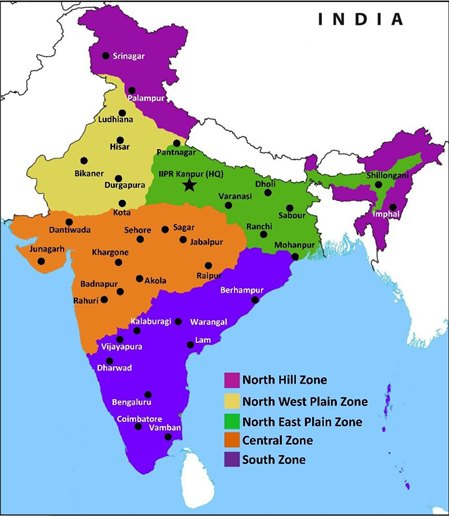
The project operates through 35 regular centres and several need-based voluntary centres across five agro-climatic zones. Across that network it plans and coordinates the sharing of experimental material, monitors trials and extension activities, and compiles and documents the findings at national level.
The team
Dr. Aditya Pratap
Project Coordinator
Dr. Biswajit Mondal
Senior Scientist (Plant Breeding)
Dr. Revanasidda
Scientist — Sr. Scale (Entomology)
Mr. Rakesh Agrawal
ACTO
Mr. H. G. Rathore
Stenographer
The project partners with the Department of Agriculture, Cooperation and Farmers Welfare, Government of India, to oversee production of nucleus and breeder seed for kharif pulses, and to promote advanced technologies through Front Line Demonstrations. A Tribal Sub Plan extends those technologies to regions with large tribal populations where kharif pulses are essential crops.
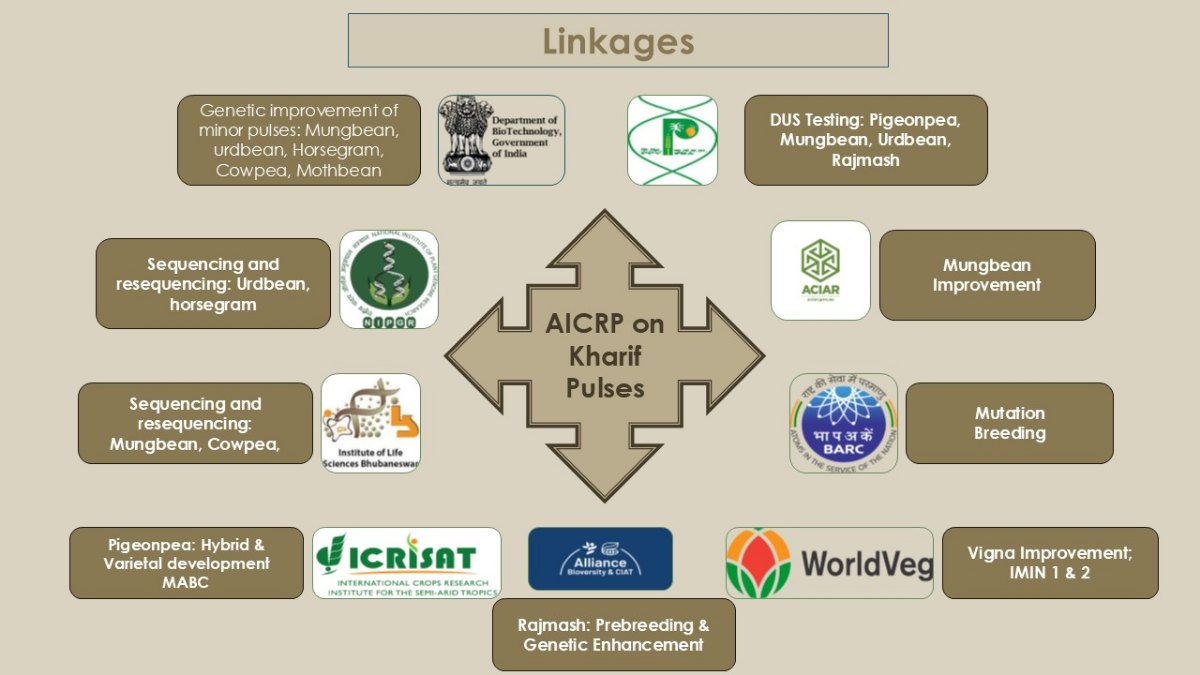
With ICAR-NBPGR, New Delhi, the unit rejuvenates, evaluates and characterizes pigeonpea genetic resources at four centres — IIPR Kanpur, ARS Gulbarga, ARS Badnapur and SDAU S. K. Nagar — through the CRP Agrobiodiversity platform, so that core and mini-core sets are available to breeders across India. The unit also works with PPV&FRA on DUS testing for farmers’ varieties and other kharif pulse varieties, and collaborates internationally with ICRISAT Hyderabad, ICARDA and WorldVeg.
The project conducts, monitors, guides and coordinates research on nine pulse crops across its centres.
Enhance national production
To enhance production of kharif pulses at the national level, through intensification and enhanced genetic gain of cultivars.
Coordinate interdisciplinary research
Coordination of strategic and applied interdisciplinary research at national level to overcome yield-reducing factors — intensification of cultivation into new agro-ecological niches, genetic improvement in yield, quality and stress resistance, efficient crop production and protection packages, genetic diversification for alternative uses, and product diversification and value addition.
Disseminate technology
Technology dissemination through FLDs, on-farm research, Kisan Melas and seminars.
Build human resource
Human resource development through training programmes for technical staff and farmers on improved pulses technologies.
Build collaboration
Identification of collaborative programmes in pulses research at national and international level.
Assess impact
Conducting impact studies for feedback and refinement of technology.
Objectives
Plant genetic resource management — collection, evaluation, maintenance and utilization — in association with ICAR-IIPR and ICAR-NBPGR.
Development of high yielding varieties, including hybrids in pigeonpea, with multiple stress tolerance and enhanced nutritional quality for different agro-ecological zones.
Development of location-specific crop production and crop protection technologies.
Production of breeder seed as per DAC&FW indents to meet the quality seed requirement of different pulses.
Demonstration of newly developed varieties and technologies through Front Line Demonstrations.
Maintenance of crop genetic resources and widening the genetic base through pre-breeding and targeted breeding approaches
Development of early maturing and photo-thermo period insensitive varieties for diversifying the rice–wheat cropping system
Exploitation of heterosis in pigeonpea for new high yielding hybrids, and development of diverse cytoplasmic male-sterile and R-lines resistant to phytophthora stem blight, fusarium wilt, sterility mosaic disease and major abiotic stresses
Identifying and evolving elite, stable sources of resistance to biotic and abiotic stresses for use in breeding programmes
Improving water and nutrient use efficiencies in rainfed production systems
Development and dissemination of advanced, cost-effective integrated production technologies for enhanced farmer livelihoods
Development of profitable intercropping and sequence-cropping systems to make kharif pulse production more profitable
Production and distribution of quality seed material with desired genetic purity
Conducting front line demonstrations, promoting linkages with extension agencies and user industries, and farmer-participatory selection in target regions
Development of harvest, post-harvest and value addition technologies for reducing crop losses
Development of a national database on research efforts, and promotion of technology exchange with NARS and international partners
Tentative budget allocation, 2025–26
| Head | Allocation (₹ lakh) |
|---|---|
| Salary | 2,700.00 |
| Capital (other than NEH) | 7.00 |
| General (other than NEH) | 525.90 |
| TSP (General) | 25.00 |
| NEH (General) | 100.00 |
| Total | 3,357.90 |
The project is majorly funded by ICAR. Smaller, objective-specific funds come from PPV&FRA, DAC&FW and other agencies as ad-hoc projects.
Cadre strength
192
Total manpower
116
Scientific
76
Technical
Three disciplines
Scientists at the 35 centres work across three major disciplines:
Since its inception the project has coordinated the development and release of 602 kharif pulse varieties. Open a crop to see the year-wise releases of the last decade.
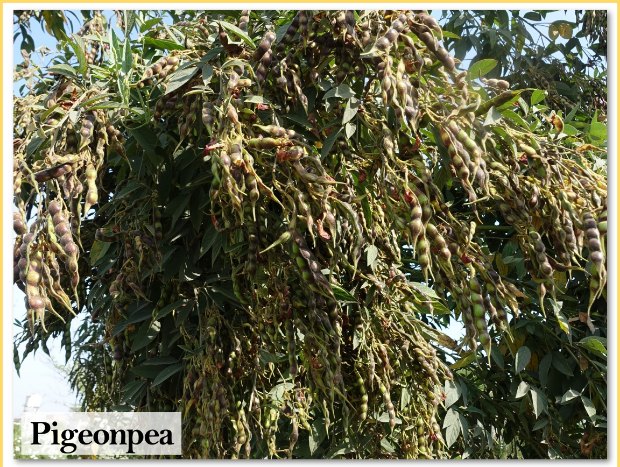
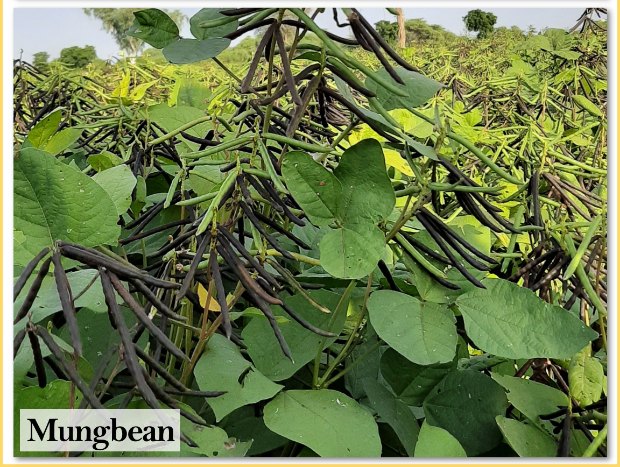
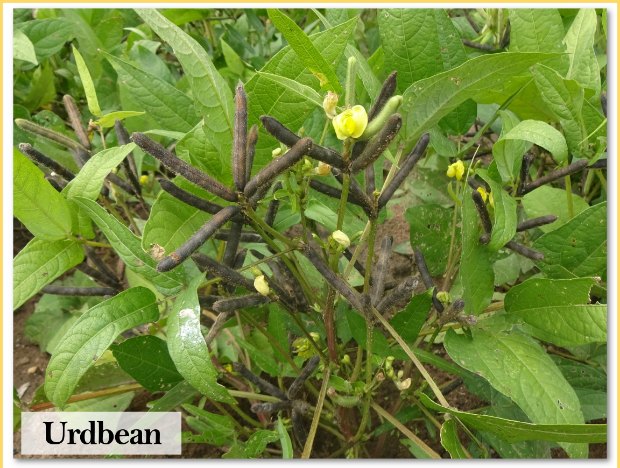
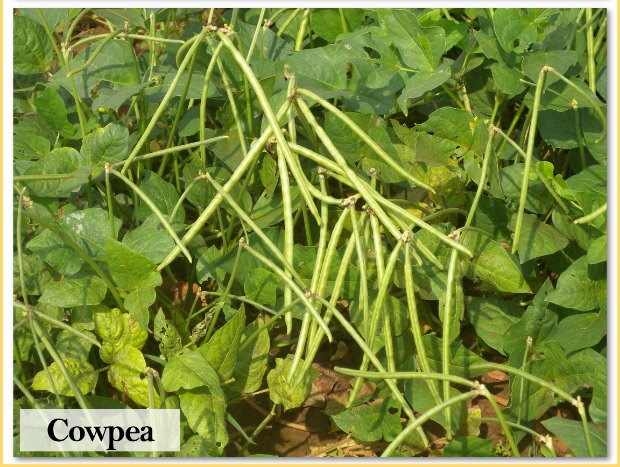
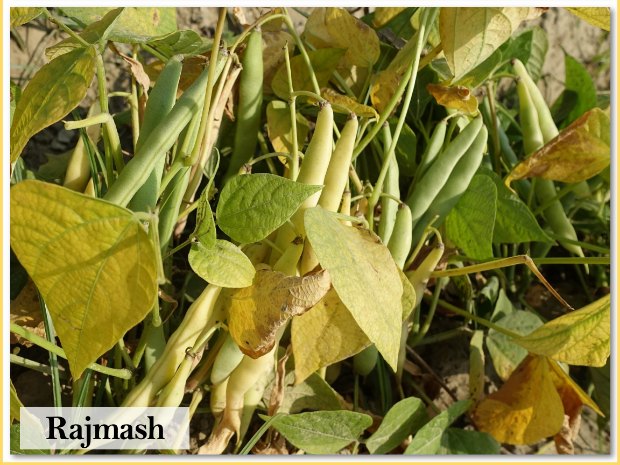
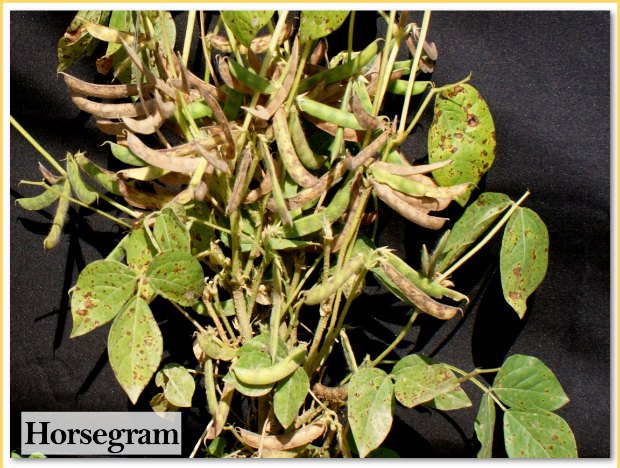

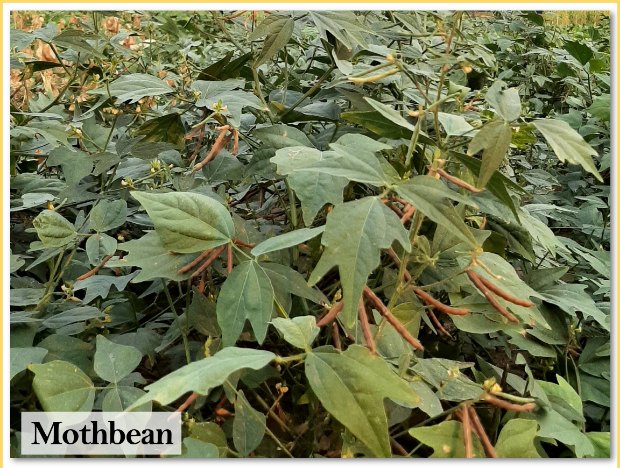
For full details of these varieties, see the Project Coordinator’s Report, 2025.
Crop production recommendations made by the coordinated group in recent years.
Integrated nutrient management
Weed management
Intercropping
Water management
Yield maximization
Microbial formulations
Fungal disease control
Insect-pest control
Integrated disease management
Integrated pest management
NARS partners include state and central agricultural universities, their regional stations and ICAR institutes.
Major NARS partners (35)
Voluntary centres (20)
These centres conduct need-based evaluation trials in different disciplines.
Spring / summer / rice fallow mungbean and urdbean, summer cowpea and kharif rajmash · PDF, 16 MB
Open reportFor further details, contact
Project Coordinator, AICRP on Kharif Pulses
ICAR-Indian Institute of Pulses Research, Kanpur 208 024
Phone: 0512-2580985, 0512-2580996, Ext. 6203
Mobile: 9452060055 · Fax: 0512-2580992