भाकृअनुप- भारतीय दलहन अनुसंधान संस्थान ICAR-Indian Institute of Pulses Research Pulses For Nutritional Security
  1. Home
  2. ICAR-IIPR Regional Centre, Bikaner

ICAR-IIPR Regional Centre, Bikaner

Bikaner, Rajasthan — pulses research for the hyper-arid western plain, from climate-resilient varieties to seed production and technology transfer for arid-zone farmers.

Established February 2019

The Centre at a Glance

2019

Established, in February

100 ha

Farm area

5

Mandate crops

11

Ongoing research projects

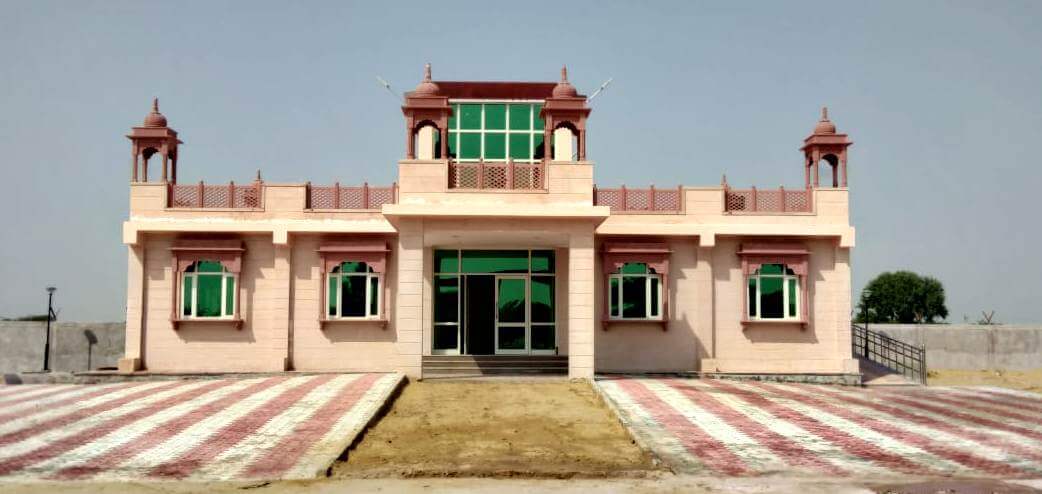
Office building of ICAR-IIPR Regional Centre, Bikaner
Office building, ICAR-IIPR Regional Centre, Bikaner (Rajasthan)
About the centre

Overview

ICAR-IIPR Regional Centre, Bikaner was established in February 2019 and is situated in agro-climatic zone IC (hyper arid, partially irrigated western plain) of Rajasthan.

The objectives of the centre are to cater to the needs of pulse-growing farmers of the arid region — breeding improved and climate-resilient varieties, developing location-specific technologies for enhanced pulses production, large-scale quality seed production, and the demonstration and transfer of technologies to enhance the productivity and profitability of pulse growers in the arid ecosystem.

Location & facilities

Infrastructure Development

28.07°N

Latitude

73.32°E

Longitude

225 m

Altitude

The farm — 100 hectares

  • 70 ha acquired from ICAR-CAZRI, with tube-well irrigation.
  • 30 ha acquired later from ICAR-CSWRI, under canal command irrigation.
  • The entire farm area is enclosed with a boundary wall and fencing to support secure and efficient farm operations.

Buildings & installations

  • Office building
  • Threshing floor
  • Seed processing unit
  • Seed storage godowns
  • Poly house for research and cultivation under controlled conditions
  • Diggi — irrigation water storage tank, to enhance water availability for irrigation
Mandate

Research Activities

Mandate crops

  • Mothbean
  • Cowpea
  • Mungbean
  • Cluster bean
  • Chickpea
1

Varietal development

Breeding programmes focused mainly on mothbean and cowpea, aimed at new pulse varieties with improved yield, nutritional quality and resilience to environmental stresses. The centre conducts extensive research on pulse germplasm to identify traits such as drought tolerance, heat resistance and pest resistance — characterizing, screening and evaluating diverse germplasm collections to identify promising genetic resources for further breeding programmes.

2

Production & protection technologies for arid pulses

The centre develops and promotes production and protection technologies for pulse crops under arid and semi-arid conditions, with a primary focus on optimizing irrigation and nutrient management in water-scarce regions — micro-irrigation, scheduling based on crop stages, and efficient use of fertilizers. It also works on integrated disease and insect pest management: identifying region-specific threats, developing resistant varieties, and promoting eco-friendly control measures such as biological control agents, crop rotation and the timely application of biopesticides or safe chemicals.

3

Seed production & distribution

The centre plays a crucial role in breeder seed production and in the distribution of quality seed of improved mungbean and chickpea varieties, ensuring that farmers have access to certified seed that can significantly enhance crop yields and quality.

4

Technology transfer

Demonstrations, training programmes and workshops transfer technology and knowledge to farmers and stakeholders — best practices in crop management, seed treatment, integrated pest management and water-efficient irrigation tailored to arid conditions. The centre also conducts training programmes and input distribution under the SCSP programme to uplift the socio-economic status of SC farmers.

5

Collaborations & networking

The centre collaborates with other research institutions, agricultural universities, government agencies and international organizations to leverage expertise, resources and funding. A mutation breeding programme in mothbean has been initiated in collaboration with BARC for the development of drought tolerant mothbean varieties.

Looking ahead

Future Prospects

1

Research on arid pulses suited to arid and semi-arid conditions — strategies to mitigate the impacts of climate change through high-yielding, climate-resilient varieties and agronomic practices tailored to local agricultural challenges.

2

Developing and adapting technologies such as precision agriculture, water-efficient irrigation and integrated pest management systems for sustainable pulse production in the arid agro-ecosystem — enhancing productivity while conserving natural resources.

3

Strengthening training programmes and workshops for farmers, extension workers and researchers to promote the adoption of modern pulse production technologies, including skill development in seed production, crop management and post-harvest handling.

4

Encouraging entrepreneurship among farmers and youth through agri-business incubation centres, skill development programmes and access to market linkages for agricultural products.

Ongoing research

Research Projects

9 institute-funded projects and 2 externally funded projects are currently running at the centre.

A. Institute projects

Institute-funded research projects at ICAR-IIPR Regional Centre, Bikaner
S.No. Project Team
1 Integrated management of chickpea dry root rot caused by Macrophomina phaseolina PI: Dr. Sudheer Kumar
Co-PIs: Dr. S. K. Aggarwal
2 Exploring agronomic interventions for sustainable pulses productivity in arid region PI: Dr. B. Lal
Co-PIs: Dr. L. K. Rolaniya, Dr. R. L. Jat, Dr. Priyanka Gautam (ICAR-NRCC, Bikaner)
3 Social vulnerability assessment and adaptation strategies to cope with the impact of climate change in the arid region of Rajasthan PI: Dr. B. Lal
Co-PIs: Dr. Ashis R. Udgata, Dr. Uma Sah
4 Improving crop and water productivity through integration of regenerative agriculture and strategic irrigation management practices in arid ecosystem PI: Dr. R. L. Jat
Co-PIs: Dr. L. K. Rolaniya, Dr. R. K. Jhaakar (Soil Science, SKRAU Bikaner), Dr. Viksa Sharma (Microbiology, SKRAU Bikaner)
5 Long-term effect of pulses in diversifying pulses-based cropping system on crop productivity and soil health in the western dry region of India PI: Dr. R. L. Jat
Co-PIs: Dr. L. K. Rolaniya, Dr. B. Lal, Dr. S. K. Aggarwal, Dr. R. K. Jhaakar (Soil Science, SKRAU Bikaner), Dr. Viksa Sharma (Microbiology, SKRAU Bikaner)
6 Prevalence, distribution and management of major fungal diseases of kharif pulses in arid region PI: Dr. Sumit Kumar Aggarwal
Co-PIs: Dr. Sudheer Kumar, Dr. Ram Lal Jat, Dr. Ashok Kumar (SKRAU Bikaner), Dr. Laxman Singh Rajput (ICAR-CAZRI, Jodhpur)
7 Improving soil health and minimizing the yield gap in pulses through resource conservation technologies in arid ecosystem PI: Dr. Lalit Kumar Rolaniya
Co-PIs: Dr. Ram Lal Jat, Dr. Banwari Lal
8 Development of integrated weed management strategies for pulse-based cropping systems in arid region PI: Dr. L. K. Rolaniya
Co-PIs: Dr. R. L. Jat, Dr. B. Lal, Dr. C. P. Nath, Dr. Viksa Sharma (Microbiology, SKRAU Bikaner)
9 Development of abiotic and biotic stress resistant genotypes in arid pulses — mothbean, cowpea and cluster bean PI: not stated
Co-PIs: Dr. A. K. Raniar, Dr. S. K. Aggarwal, Dr. Manu B. D., Dr. L. K. Rolaniya

B. Externally funded projects

Externally funded research projects at ICAR-IIPR Regional Centre, Bikaner
S.No. Project Funding agency Team
1 Exploring and utilizing microbial communities from mothbean and cluster bean to improve stress resilience in pulses in arid region AMAAS network, ICAR-NBAIM, Mau PI: Dr. Sudheer Kumar
2 Supply chain of pulses in major pulse production states of India with focus on Eastern states Department of Consumer Affairs, Ministry of Consumer Affairs, Food and Public Distribution PI: Dr. Uma Sah, ICAR-IIPR, Kanpur
Co-PIs: Dr. Sudheer Kumar, Dr. B. Lal